
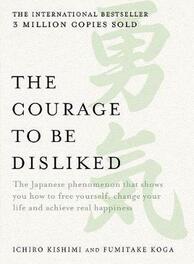
 "The Courage to Be Disliked" by Ichiro Kishimi & Fumitake Koga is a self-help book that explores the principles of Adlerian psychology and how they can help individuals find happiness and overcome feelings of inferiority.
Adlerian psychology is a school of thought within the field of psychology that was founded by Alfred Adler, an Austrian psychiatrist, in the early 20th century. The basis of Adlerian psychology is the idea that human behavior is motivated by a drive for social connection and a desire to overcome feelings of inferiority. Adler believed that each individual has a unique perspective on the world, and that this perspective is shaped by their early childhood experiences and social interactions. He believed that people are not passive victims of their environment, but rather active agents who can choose to change their circumstances and create a better future for themselves. Adlerian psychology emphasizes the importance of social interest, which is the ability to connect with others and contribute to society. This concept is based on the idea that people are inherently social creatures who thrive in supportive and collaborative environments. In summary, the basis of Adlerian psychology is the belief that human behavior is motivated by a drive for social connection, and that people have the power to shape their own destiny by developing their social interest and taking responsibility for their choices. The following lists some of the main takeaways from the book "The Courage to be Disliked":
Overall, "The Courage to Be Disliked" is a thought-provoking book that offers practical advice for anyone looking to live a happier, more fulfilling life. By embracing the principles of Adlerian psychology, readers can learn to overcome their fears and live with greater courage and confidence.
0 Comments
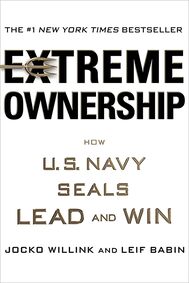 "Extreme Ownership" by Jocko Willink is a powerful guide to achieving success in both business and life. The book is based on Willink's experience as a Navy SEAL and his work as a leadership consultant, and it offers a set of principles that can help anyone become a better leader and achieve their goals.
At the heart of the book is the idea of extreme ownership. Willink argues that in order to succeed, we must take full responsibility for our actions and our circumstances. We must be willing to own our mistakes, learn from them, and move forward with a clear sense of purpose. One of the key takeaways from the book is the importance of communication. Willink stresses the need for clear, concise communication in all aspects of life, from the battlefield to the boardroom. He also emphasizes the importance of listening and being receptive to feedback, as well as the value of building strong relationships with those around us. Another central theme of the book is the importance of discipline. Willink argues that discipline is the key to success in any endeavor, and that we must be willing to push ourselves to our limits in order to achieve our goals. He also emphasizes the importance of planning and preparation, providing practical tips for developing good habits and routines. Overall, "Extreme Ownership" is a must-read for anyone who wants to achieve success in their personal or professional life. Whether you're a business owner, a manager, or simply someone who wants to be a better leader, this book offers a wealth of insights and practical advice. So, if you're ready to take ownership of your life and achieve your goals, be sure to pick up a copy of "Extreme Ownership" today. If you're interested in purchasing "Extreme Ownership", you can click on the affiliate link below to buy it on Amazon and support my blog. A breakdown of the key take aways are listed below: Introduction:
Book Summary of the "48 Laws of Power" by Robert Greene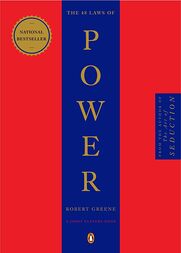 "The 48 Laws of Power" is a timeless classic that reveals the secrets of gaining and maintaining power in any social setting. Authored by Robert Greene, this book presents 48 laws of power that are based on historical and philosophical examples from around the world. Each law is explained in detail and illustrated with examples from history and contemporary life.
This book is a must-read for anyone who wants to understand the dynamics of power and how to wield it effectively. From mastering the art of deception to never outshining the master, "The 48 Laws of Power" provides a comprehensive guide to achieving success in all aspects of life.
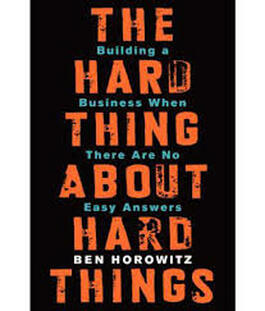 The Hard Thing About Hard Things: Building a Business When There Are No Easy Answers: Ben Horowitz
Conclusion: Horowitz is brutally honest in his recollection of the adversity of business and the start up world. I have read many books on business before, and this is one of the stand out books that really spent some time dealing with the downs, the depression and anxieties of business. I highly recommend this book for anyone who has just started or is thinking of starting a business as it shows the highs and lows that are not suited to everyone. Ben Horowitz, co-founder of Andreessen Horowitz and one of Silicon Valley's most respected and experienced entrepreneurs, offers essential advice on building and running a startup — practical wisdom for managing the toughest problems business school doesn’t cover, based on his popular Ben’s blog. While many people talk about how great it is to start a business, very few are honest about how difficult it is to run one. Ben Horowitz analyzes the problems that confront leaders every day, sharing the insights he has gained from developing, managing, selling, buying, investing in, and supervising technology companies. A lifelong rap fanatic, he amplifies business lessons with lyrics from his favourite songs, telling it straight about everything from firing friends to poaching competitors, cultivating and sustaining a CEO mentality to knowing the right time to cash in. Filled with his trademark humour and straight talk, The Hard Thing About Hard Things is invaluable for veteran entrepreneurs as well as those aspiring to their own new ventures, drawing from Horowitz's personal and often humbling experiences. 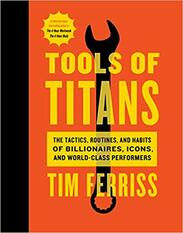 Conclusion: I found this book extremely valuable, the author Tim Ferris combines his interviews with world-class performers into short summaries. These world-class performers include celebrities, athletes, scientists and more, the beautiful thing about this book is that if a subject matter or person captures your mind you can then further investigate that further in your own time, the chapters are typically short, and act as a tasting plate of the worlds best in their chosen field.
I highly recommend this book as a first step, this book will start a segway into your journey of knowledge and self development. It will open so many doors to knowledge for the reader. Please see a note from the owner below... From the author: “For the last two years, I’ve interviewed more than 200 world-class performers for my podcast, The Tim Ferriss Show. The guests range from super celebs (Jamie Foxx, Arnold Schwarzenegger, etc.) and athletes (icons of powerlifting, gymnastics, surfing, etc.) to legendary Special Operations commanders and black-market biochemists. For most of my guests, it’s the first time they’ve agreed to a two-to-three-hour interview. This unusual depth has helped make The Tim Ferriss Show the first business/interview podcast to pass 100 million downloads. “This book contains the distilled tools, tactics, and ‘inside baseball’ you won’t find anywhere else. It also includes new tips from past guests, and life lessons from new ‘guests’ you haven’t met. “What makes the show different is a relentless focus on actionable details. This is reflected in the questions. For example: What do these people do in the first sixty minutes of each morning? What do their workout routines look like, and why? What books have they gifted most to other people? What are the biggest wastes of time for novices in their field? What supplements do they take on a daily basis? “I don’t view myself as an interviewer. I view myself as an experimenter. If I can’t test something and replicate results in the messy reality of everyday life, I’m not interested. “Everything within these pages has been vetted, explored, and applied to my own life in some fashion. I’ve used dozens of the tactics and philosophies in high-stakes negotiations, high-risk environments, or large business dealings. The lessons have made me millions of dollars and saved me years of wasted effort and frustration. “I created this book, my ultimate notebook of high-leverage tools, for myself. It’s changed my life, and I hope the same for you.”  This book is recommended by various entrepreneurs...
The Tao of Pooh is a book written by Benjamin Hoff. The interesting thing about this book is that it attempts to introduce the Eastern Belief system of Taoism from the point of view of Winnie the Pooh and his popular fictional character friends (Rabbit, Piglet, Kanga etc.). Hoff also wrote The Te of Piglet, a companion book. The version I read combined both The Tao of Pooh and The Te of Piglet. My review will only be based on The Tao of Pooh, as I only skimmed through The Te of Piglet. From my interpretation of Taoism from this book, it is simply to accept oneself (similar to how Pooh lives his life), carefree and simplistically. Nothing bothers him nor affects his mood (too much) as he is at one with nature, the basic principle of Taoism is to live life and discover who you are. Your nature/natural state is ever changing. Don’t try to resolve the various contradictions in life, instead learn acceptance of your flow with nature and everything will occur organically. There is mention of the well known metaphor about water. Be like water as it flows naturally, if finds cracks and gaps to move through when there are obstacles in it way. Be like water, as like a stream it will naturally find its way to where it needs to be. I personally found the book of some benefit, however found it difficult to engage with. Taoism does have its place, often we should not over analyse things (as it can lead to stress, depression or anxiety) and let them unfold naturally. Should we use these teachings as a full-time methodology for life? That you can decide for yourself. In world that is goal and ambition driven, the Taoist principles are counter intuitive to that. Yet the teachings to slow down and not to over think and react definitely have a place in everyone's world. The concept of explaining Taoism through examples of "Poohism" was creative and clever. My basic understanding of Taoism from this book is to live life with simplicity. I am sure there are many more layers to Taoism than this, in which I guess if I follow Taoist beliefs, I'll just let nature take its course and if life wants me to learn more (about Taoism) it will lead me there, if it is not meant to be I won't. 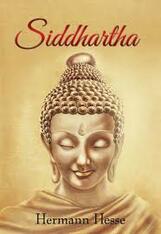 I discovered this book as it is mentioned on several podcasts and in Tim Ferris' Tools of Titans.
Siddhartha is a beautifully written novel by Hermann Hesse that deals with the spiritual journey of self-discovery of a man named Siddhartha during the time of the Gautama Buddha. Originally written in German, in a simple, lyrical style it has since been translated into other languages. The word Siddhartha is made up of two words in Sanskrit language, siddha (achieved) + artha (what was searched for), which together means "he who has found meaning (of existence)" or "he who has attained his goals". In fact, the Buddha's own name, before his renunciation, was Siddhartha Gautama, Prince of Kapilavastu. In this book, the Buddha is referred to as "Gotama". In Hesse’s novel, experience, the totality of conscious events of a human life, is shown as the best way to approach understanding of reality and attain enlightenment—Hesse’s crafting of Siddhartha’s journey shows that understanding is attained not through intellectual methods, nor through immersing oneself in the carnal pleasures of the world and the accompanying pain of samsara. It is the completeness of these experiences that allows Siddhartha to attain understanding. Extract taken from https://en.wikipedia.org/wiki/Siddhartha_(novel) PLOT SUMMARY: Siddhartha, is the handsome and respected son of a Brahmin (high priest caste in Indian culture). Set in ancient India, everyone in the village expects Siddhartha to be a successful Brahmin like his father. Siddhartha enjoys a comfortable existence with his best friend, Govinda, but he is unforfilled. He studies and practices all the rituals of his religion, and he does everything he should to bring him happiness and peace. Nonetheless, he feels empty. His father and the other elders have still not achieved enlightenment, and he feels that staying with them will not settle the questions he has about the nature of his existence. Siddhartha believes he has learnt everything he can in his village and looks to seek more. Siddhartha continues his life journey of self discovery meeting various mentors that teach him a different perspective for lie. A group of wanders called Samana, they are starved and almost naked and have come to beg for food. They believe enlightenment can be reached through asceticism, a rejection of the body and physical desire. Siddhartha learns how to free himself from the traditional trappings of life, and so loses his desire for property, clothing, sexuality, and all things except for that which is required to live. His goal is to find enlightenment by eliminating his Self, and he successfully renounces the pleasures of the world. Siddhartha hears about a new holy man named Gotama the Buddha who has attained the total spiritual enlightenment called Nirvana. Govinda convinces Siddhartha they both should leave seek out Gotama. Siddhartha meets Gotama but decides to embark on a life free from meditation and the spiritual quests he has been pursuing, and to instead learn from the pleasures of the body and the material world. On his journey, Siddhartha crosses the ferryman’s river and comes to a city. Here, a beautiful courtesan named Kamala draws his attentions. He knows she would be the best one to teach him about the world of love and lust, but Kamala will not have him unless he proves he can fit into the material world. Siddhartha soon finds employment with a merchant named Kamaswami and begins to learn art of business. While Siddhartha learns the wisdom of the business world and begins to master the skills Kamaswami teaches him, Kamala becomes his lover and teaches him what she knows about love and lust. The material world causes Siddhartha into a depressed mindset, causing him to seek out the same content ferryman he met years before. The ferryman, who introduces himself as Vasudeva, radiates an inner peace that Siddhartha wishes to attain. Siddhartha studies the river and begins to take from it a spiritual enlightenment unlike any he has ever known. While sitting by the river, he contemplates the unity of all life. One day Kamala the courtesan approaches the ferry along with her son on a pilgrimage to visit Gotama. This boy whom is identified as Siddhartha's. Siddhartha tries to provide for his son, but the boy is spoiled and cynical. Siddhartha’s son dislikes life with the two ferrymen and wishes to return to his familiar city and wealth. Siddhartha awakens to find his son has run away and stolen all of his and Vasudeva’s money. Siddhartha chases after the boy, but as he reaches the city he realizes the chase is futile. Siddhartha soothes the pain of losing his son by listening to the river. Just as the water of the river flows into the ocean and is returned by rain, all forms of life are interconnected in a cycle without beginning or end. Birth and death are all part of a timeless unity. Life and death, joy and sorrow, good and evil are all parts of the whole and are necessary to understand the meaning of life. By the time Siddhartha has learned all the river’s lessons, Vasudeva announces that he is through with his life at the river. He retires into the forest, leaving Siddhartha to be the ferryman. The novel ends with Govinda returning to the river to seek enlightenment by meeting with a wise man who lives there. When Govinda arrives, he does not recognize that the wise man is Siddhartha himself. Govinda is still a follower of Gotama but has yet to attain the kind of enlightenment that Siddhartha now radiates, and he asks Siddhartha to teach him what he knows. Siddhartha explains that neither he nor anyone can teach the wisdom to Govinda, because verbal explanations are limited and can never communicate the entirety of enlightenment. Instead, he asks Govinda to kiss him on the forehead, and when Govinda does, the vision of unity that Siddhartha has experienced is communicated instantly to Govinda. Govinda and Siddhartha have both finally achieved the enlightenment they set out to find in the days of their youth. Conclusion: I enjoyed this book, as in our own lives we wear different hats at different periods of our journey. Those periods of growth and challenges prepare us for our next chapter teaching and equipping us with the tools for what lies ahead. This book beautifully encapsulates this narrative. Extracts taken from https://www.sparknotes.com/lit/siddhartha/summary/ 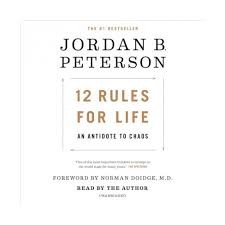 12 Rules for Life: An Antidote to Chaos was published in 2018 by Canadian clinical psychologist and psychology professor Jordan Peterson. The book provides life advice through essays on abstract ethical principles, psychology, mythology, religion, and personal anecdotes. The book is broken up into 12 parts/"rules" for life: 1. Stand up straight with your shoulders back This physical posture says to the world "I am confident and a force to be recond with". Consciously being aware of this posture will eventually make it second nature, and people will respond to you better and take you more seriously in the world. The world doesn't reward the meek. 2. Treat yourself like someone you are responsible for helping We often take care of our family members, friends and pets better than we take care of ourselves. Don't be so hard on yourself, and treat yourself the same way as you would someone you love dearly. 3. Make friends with people who want the best for you Rid yourself of toxic friends, and remember you are the average of the five people you hangout with the most. So if you hang out with five drug addicts, the odds are you will become a drug addict. Hangout with five people who are driven, motivated and have a desire for growth, and you will most likely be like that as well. 4. Compare yourself to who you were yesterday, not to who someone else is today Comparison to another persons haves results in envy. Peterson suggests rather than compare yourself to another person, compare yourself to the person you were yesterday, and each day try to improve yourself (just a little bit) from the person you were the day before. As Roosevelt said "comparison is the theif of joy". 5. Do not let your children do anything that makes you dislike them Raise your children in a manner where they will be liked by others, don't let them do things that make you dislike them, you can imagine if you don't like them, then other people (children and adults) will dislike them. It is the role of the parent to ready them (children) for positive interactions with the outside world, and a large part of that is social interactions with other people. If they are raised in a manner where they think they can get away with doing unlikable things, then this will make it difficult for them to be liked later on in life. 6. Set your house in perfect order before you criticize the world Our world is abundent with suffering and malevolence, so why spend our time and energy trying to criticise or fix another person. Instead concentrate on fixing ourselves first, as that is a life time journey. 7. Pursue what is meaningful (not what is expedient) 8. Tell the truth – or, at least, don't lie Don't corrupt your own perceptions, if you lie they you are really lying to yourself, then you cannot trust your own perceptions, and then nothing you pursue will be pure. 9. Assume that the person you are listening to might know something you don't This is a mark of recognition of ones own ignorance, what is more important? What you do know or what you don't know? There is a lot that we don't know, and often what we don't know is more important that what we already know. Listen to others and you may learn something new. 10. Be precise in your speech 11. Do not bother children when they are skateboarding Do not shelter your children. The world is a hard place which is touched with betrayal and malevolence, this is a metaphor to allow your children to expose themselves to some level of risk, to prepare them to thrive in a world where they can't be sheltered from. 12. Pet a cat when you encounter one on the street What to do when you don't know what to do? When life has hit a road hump, how do you cope with that? The necessity of narrowing your time frame to the adversity and taking the time to appreciate the small things that cross your path. Conclusion: I found this book helpful and see it as a good starting point for people who are lacking to find or develop any definition in their character. These 12 rules can be a starting block for greater self development as we know personal growth is a long life journey and this book is a good start.
For those Dapper Men who are about the details that will complete their look. Including pin pointing their collars in the perfect upright position without any flare outs, magnetic collar stays are the solution. If you often go for the tie-less look, but are sick of your collars flaring out and not staying in place, you need a set of Magnetic Collar Stays by Dapper Man. This product is designed to keep your collars in place all the time. Your stainless steel collar stays are inserted into the small pouch in the underside of your shirt collar (please check your shirt has this pouch under the collar) .  Instructions on how to use your magnetic collar stays The small magnet is placed on the inner side of the shirt where the stainless steel stay and magnet stick together keeping your collar in the perfect place.
The magnetic collar stays by Dapper Man are used by stylists, fashion photographers, instagram influencers and celebrities worldwide and are of the highest quality and best value available. Available at www.dapperman.com.au/shop.html |